JET Programme Series: Setsubun - Driving Out Oni, Welcoming Fortune - Chantal Hamilton
2026/2/3
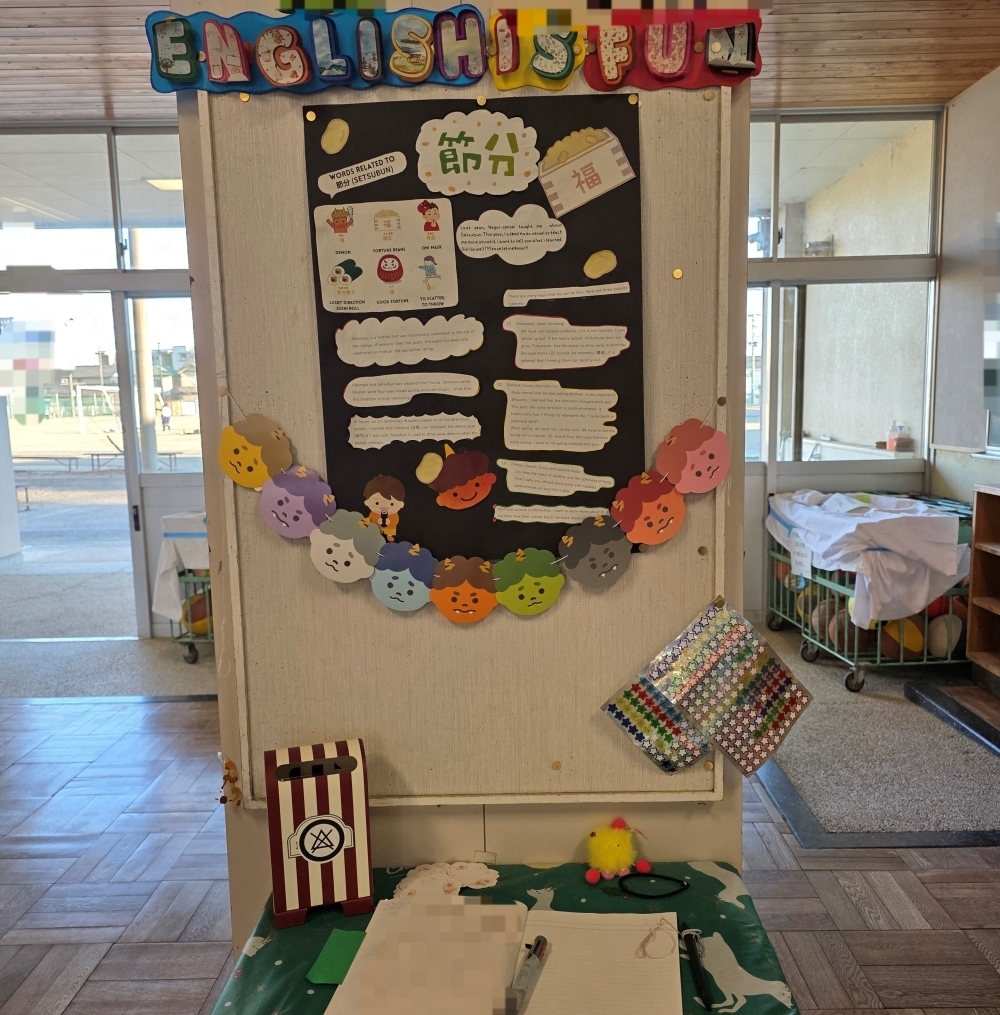
There are times when you’re spaced out at your desk, watching the hours tick by while being slightly tickled by the hubbub around you. At that time last year, through the playful screams of the students outside, a teacher asked me, “Chantal, have you ever heard of Setsubun?”
Well, had I ever heard of Setsubun? No! Hence, I became very intrigued. Despite formally studying Japanese before my departure, many words and even pronunciations were (are still) unknown to me. The teacher’s tone was one of cautious curiosity. She’d been desperately fighting her eagerness to share the tradition with me.
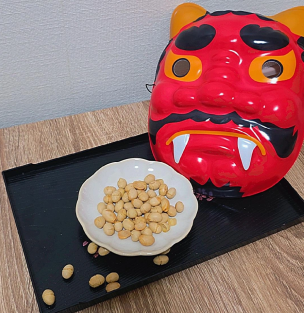
She explained it in a sweet and tangible way. First, she gave me a handful of fukumame (fortune beans), marveling as I inspected it with confusion. Then, using simple Japanese and gestures, she explained that we throw these fukumame out the window while chanting, “Oni wa soto, fuku wa uchi”, to dispel bad luck as the season changes.
The interaction was so thoughtful and seemed silly at first that it stayed with me. Now, as the nights get shorter despite the cold temperatures, and I'm anticipating spring, I can't help but reminisce.
This will be my second Setsubun. Allow me to share what I’ve learned so far!
(Side note, I will occasionally be using Japanese words, alongside its kanji. If I can teach you at least one Japanese word by the end of this piece, I’ll be happy.)
So, what exactly is Setsubun (節分)?
It’s a traditional festival that is observed on the last day of winter (the day before spring). In Japanese, the day before spring is called ‘Risshun’ (立春). This year 2026, Setsubun 節分will be observed on Tuesday 3rd February.
What I found interesting was that 節分 has Chinese roots. It progressed from Tsuina, a court ritual performed to drive out misfortune and diseases, into the bean-throwing festival, ‘mamemaki’ (豆まき), that it’s commonly recognized by today.
You may have noticed that I’ve been writing ‘Setsubun’ in its kanji so far. Let me explain why! When written in kanji, Setsubun is ingeniously expressed as ‘the transition between seasons’.
(1) Setsu 節 seasonal (Phonetic: setsoo)
(2) Bun 分 division (Phonetic: buhn)
Historically, Setsubun referred to the eves of spring, summer, autumn, and winter. In Japanese, these days are respectively called risshun (立春), rikka (立夏), risshū (立秋), and rittō (立冬). As time progressed, the word ‘Setsubun’ became reserved for risshun, the eve of spring. Interesting fact: in the old Japanese calendar, risshun marked the start of the new year. We can think of it as their Old Year’s day. In some Trinbagonian households, we practice traditions such as but not limited to, visiting our religious institutions, ‘airing out’ our homes, doing all the laundry, or soaking black eyed peas (for pelau) to welcome good luck and prosperity into the new year. Japanese people have, of course, their own customs and traditions to ward off evil and welcome good luck. It’s important to draw similarities and appreciate the differences in the way different cultures practice their traditions.
Now, I’d like to introduce the word ‘Oni’(鬼) to you. If you were also a huge fan of Street Fighter games as I was, this word should spark some familiarity. As for me, Oni became synonymous with demons after playing as the character Shujinko in the Mortal Kombat: Deception game. In a sense, they are demons. Traditionally, Oni are personifications of diseases and disasters that are based on an ancient directional system. There is a belief that the Northeast direction 丑寅 (Ushitora) has an alignment with the zodiac animals ox 丑 (ushi) and tiger 寅(tora). In Japan, this alignment is seen as a bad omen as it represents the demon gate, kimon 鬼門. Hence, Setsubun is used to drive Oni away when the seasons transition.
Dry air along with sudden changes in atmospheric pressure, humidity, weather and temperature, places significant stress our immune systems. Cold conditions allow viruses to linger, while our mucous membranes can become dry or cracked, making us more vulnerable to infection. As temperatures rise, dormant clusters of viruses and bacteria re-emerge. During these seasonal transitions, our immune defenses are strained and weakened, leaving us especially susceptible. If we view this vulnerability as an oni, we can better understand the significance of Setsubun at risshun.
In Japan, fukumame 福豆 (fortune beans) are believed to hold spiritual power that is capable of dispelling misfortune. It is one of many reasons why they consider soybeans to be sacred. If we look it phonetically, mame 豆, (beans), sounds like mametsu 摩滅, (to destroy demons). If we were to write mame 豆 (beans) with a different kanji, we would get ma-me魔 (demon-eyes). Since words not only have meaning, but power, when we throw soybeans, we are essentially destroying oni. The throwing of roasted soybeans at oni is a tradition known as mamemaki 豆撒き.
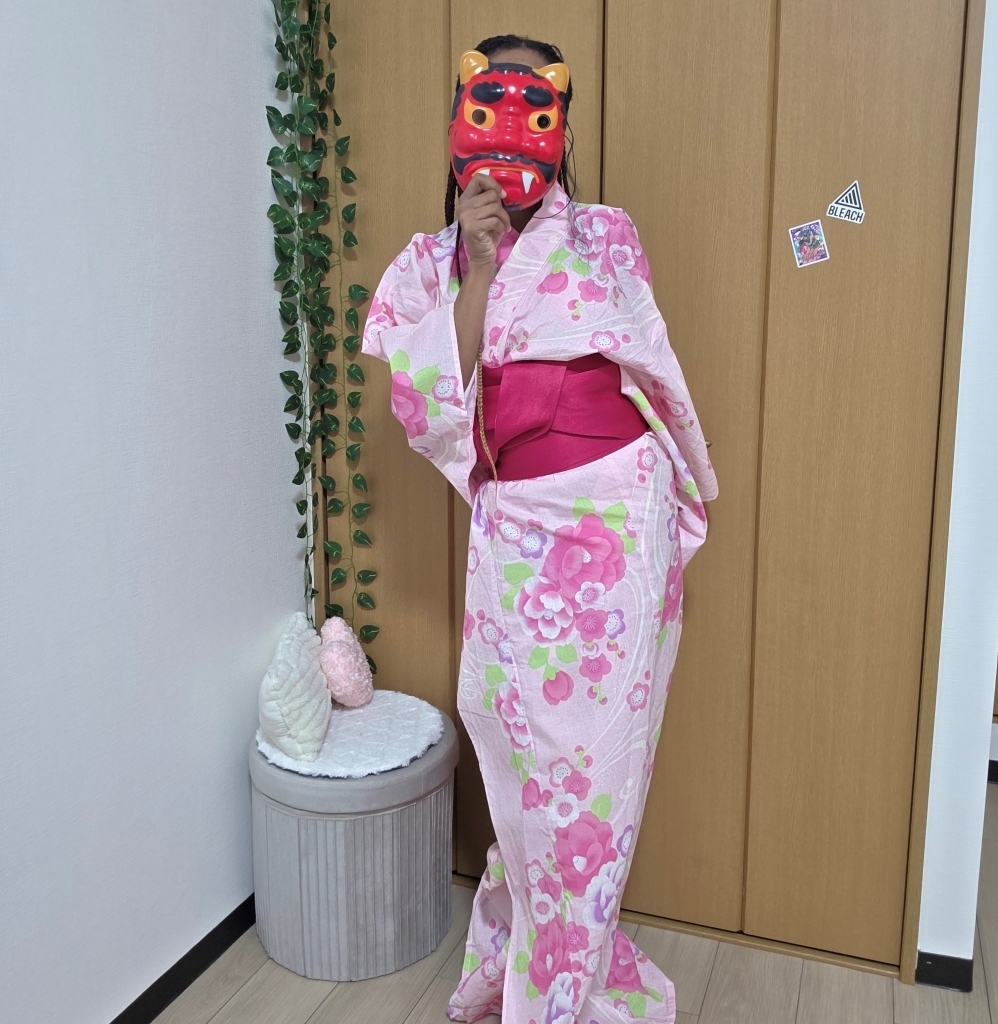
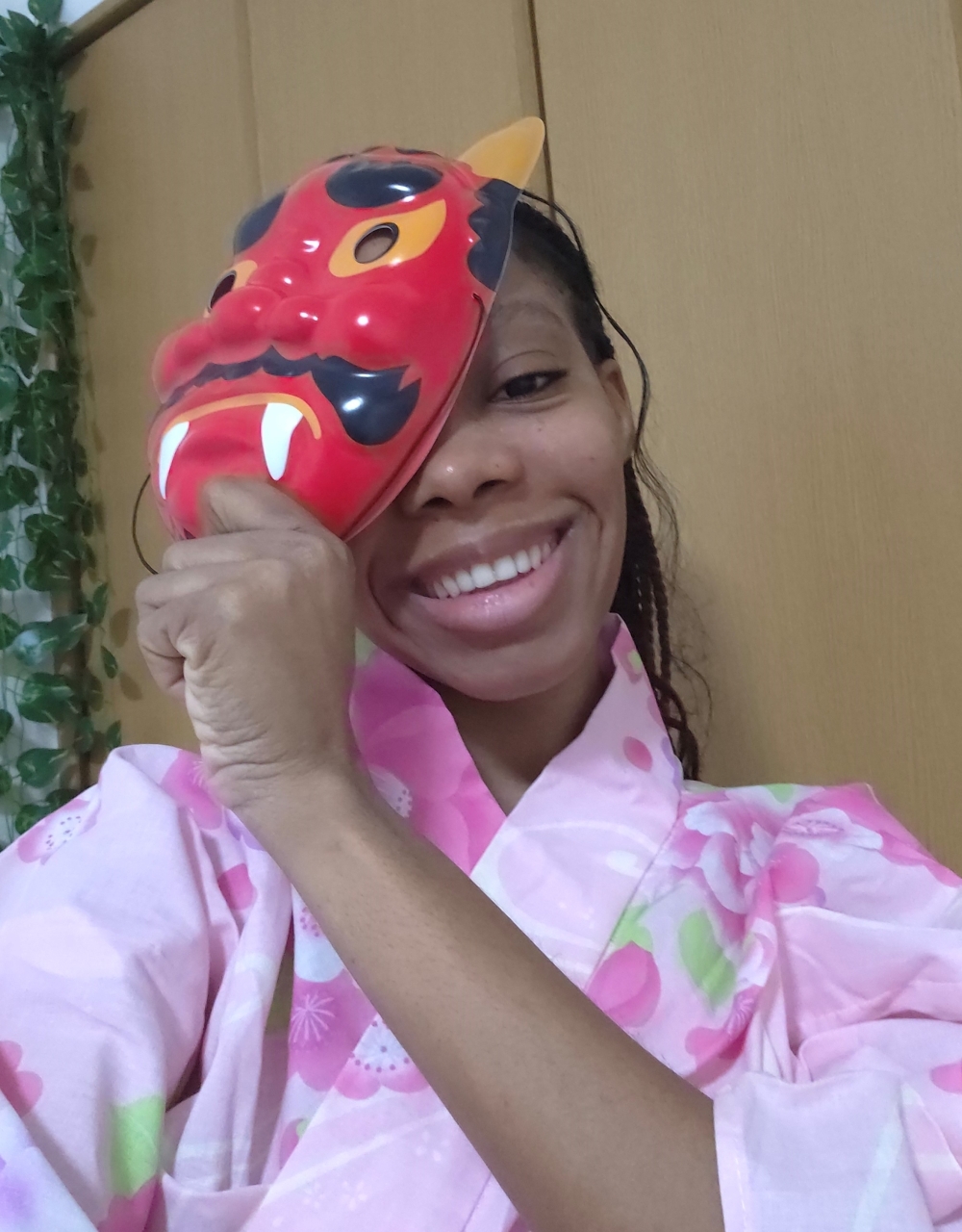
This tradition can be carried out at our homes or at a shrine. To rid the dread of winter and welcome good energy, fukumame are thrown out our windows or doors (or at a family member wearing an oni mask) while shouting, “Oni wa soto! Fuku wa uchi!”, quickly shutting it after. A rough translation of this would be, “Demons outside! Good fortune in!”. For added luck, you can enjoy the roasted soybeans in the amount of your age plus one.
The soybeans used are roasted to prevent sprouting after being thrown. Japanese people believed that if the missed soybeans were to grow, it symbolized the continuation of last year’s bad luck into the new one.
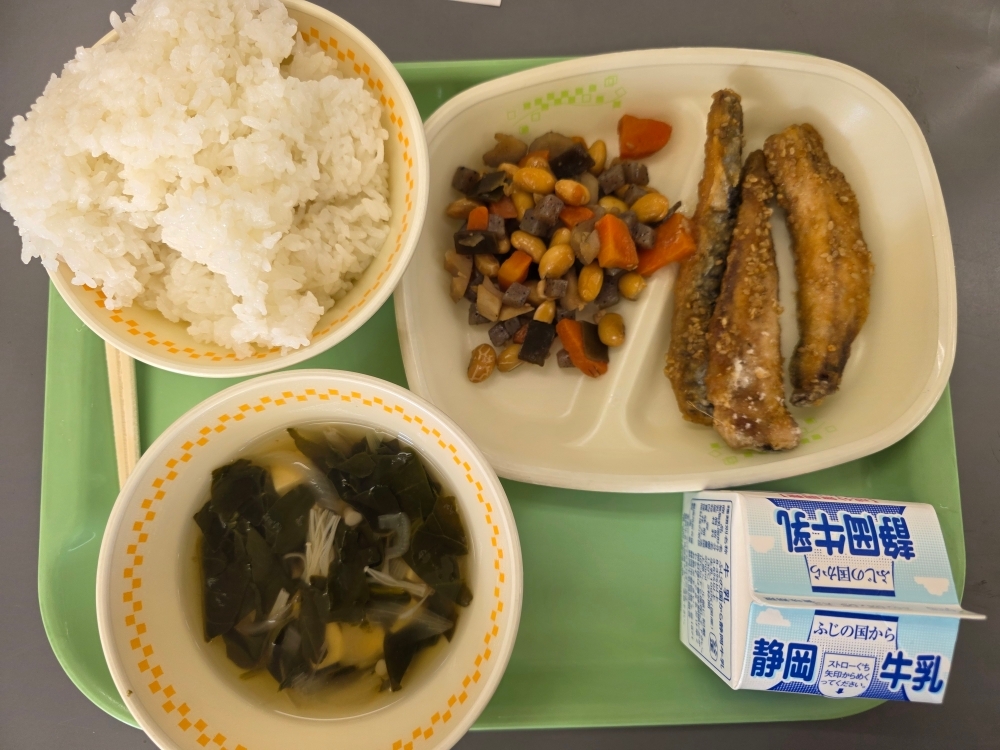
Another popular tradition is silently eating ehomaki 恵方巻 (lucky direction roll) while facing the year’s auspicious direction. This direction changes each year. This year, the lucky direction is south-southeast. This uncut sushi roll traditionally has 7 fillings to represent the 7 lucky Gods in Japanese belief. If the ehomaki were to be cut, or if we were to talk while eating, then bits of our luck would escape. Preorders for ehomaki began early January. Unfortunately, I was a day too late to secure mine. Instead, I enjoyed a nutritious Setsubun-themed kyushoku (school lunch). Hopefully, at this time next year, I’ll be enjoying ehomaki silently while facing the auspicious direction!
As much as I want to excitedly talk your ears off about a few other Setsubun-related traditions and details that I’ve learned, I’ll spare you and stick to the key notes. I don’t think I can put into words how privileged I feel to be able to learn about and experience Japanese culture outside the confines of the classroom. For all of you who’ve read this far, thank you for learning about Setsubun with me.
JET Programme Series: Setsubun - Driving Out Oni, Welcoming Fortune - Chantal Hamilton
Well, had I ever heard of Setsubun? No! Hence, I became very intrigued. Despite formally studying Japanese before my departure, many words and even pronunciations were (are still) unknown to me. The teacher’s tone was one of cautious curiosity. She’d been desperately fighting her eagerness to share the tradition with me.
She explained it in a sweet and tangible way. First, she gave me a handful of fukumame (fortune beans), marveling as I inspected it with confusion. Then, using simple Japanese and gestures, she explained that we throw these fukumame out the window while chanting, “Oni wa soto, fuku wa uchi”, to dispel bad luck as the season changes.
The interaction was so thoughtful and seemed silly at first that it stayed with me. Now, as the nights get shorter despite the cold temperatures, and I'm anticipating spring, I can't help but reminisce.
This will be my second Setsubun. Allow me to share what I’ve learned so far!
(Side note, I will occasionally be using Japanese words, alongside its kanji. If I can teach you at least one Japanese word by the end of this piece, I’ll be happy.)
So, what exactly is Setsubun (節分)?
It’s a traditional festival that is observed on the last day of winter (the day before spring). In Japanese, the day before spring is called ‘Risshun’ (立春). This year 2026, Setsubun 節分will be observed on Tuesday 3rd February.
What I found interesting was that 節分 has Chinese roots. It progressed from Tsuina, a court ritual performed to drive out misfortune and diseases, into the bean-throwing festival, ‘mamemaki’ (豆まき), that it’s commonly recognized by today.
You may have noticed that I’ve been writing ‘Setsubun’ in its kanji so far. Let me explain why! When written in kanji, Setsubun is ingeniously expressed as ‘the transition between seasons’.
(1) Setsu 節 seasonal (Phonetic: setsoo)
(2) Bun 分 division (Phonetic: buhn)
Historically, Setsubun referred to the eves of spring, summer, autumn, and winter. In Japanese, these days are respectively called risshun (立春), rikka (立夏), risshū (立秋), and rittō (立冬). As time progressed, the word ‘Setsubun’ became reserved for risshun, the eve of spring. Interesting fact: in the old Japanese calendar, risshun marked the start of the new year. We can think of it as their Old Year’s day. In some Trinbagonian households, we practice traditions such as but not limited to, visiting our religious institutions, ‘airing out’ our homes, doing all the laundry, or soaking black eyed peas (for pelau) to welcome good luck and prosperity into the new year. Japanese people have, of course, their own customs and traditions to ward off evil and welcome good luck. It’s important to draw similarities and appreciate the differences in the way different cultures practice their traditions.
Now, I’d like to introduce the word ‘Oni’(鬼) to you. If you were also a huge fan of Street Fighter games as I was, this word should spark some familiarity. As for me, Oni became synonymous with demons after playing as the character Shujinko in the Mortal Kombat: Deception game. In a sense, they are demons. Traditionally, Oni are personifications of diseases and disasters that are based on an ancient directional system. There is a belief that the Northeast direction 丑寅 (Ushitora) has an alignment with the zodiac animals ox 丑 (ushi) and tiger 寅(tora). In Japan, this alignment is seen as a bad omen as it represents the demon gate, kimon 鬼門. Hence, Setsubun is used to drive Oni away when the seasons transition.
Dry air along with sudden changes in atmospheric pressure, humidity, weather and temperature, places significant stress our immune systems. Cold conditions allow viruses to linger, while our mucous membranes can become dry or cracked, making us more vulnerable to infection. As temperatures rise, dormant clusters of viruses and bacteria re-emerge. During these seasonal transitions, our immune defenses are strained and weakened, leaving us especially susceptible. If we view this vulnerability as an oni, we can better understand the significance of Setsubun at risshun.
In Japan, fukumame 福豆 (fortune beans) are believed to hold spiritual power that is capable of dispelling misfortune. It is one of many reasons why they consider soybeans to be sacred. If we look it phonetically, mame 豆, (beans), sounds like mametsu 摩滅, (to destroy demons). If we were to write mame 豆 (beans) with a different kanji, we would get ma-me魔 (demon-eyes). Since words not only have meaning, but power, when we throw soybeans, we are essentially destroying oni. The throwing of roasted soybeans at oni is a tradition known as mamemaki 豆撒き.
This tradition can be carried out at our homes or at a shrine. To rid the dread of winter and welcome good energy, fukumame are thrown out our windows or doors (or at a family member wearing an oni mask) while shouting, “Oni wa soto! Fuku wa uchi!”, quickly shutting it after. A rough translation of this would be, “Demons outside! Good fortune in!”. For added luck, you can enjoy the roasted soybeans in the amount of your age plus one.
The soybeans used are roasted to prevent sprouting after being thrown. Japanese people believed that if the missed soybeans were to grow, it symbolized the continuation of last year’s bad luck into the new one.
Another popular tradition is silently eating ehomaki 恵方巻 (lucky direction roll) while facing the year’s auspicious direction. This direction changes each year. This year, the lucky direction is south-southeast. This uncut sushi roll traditionally has 7 fillings to represent the 7 lucky Gods in Japanese belief. If the ehomaki were to be cut, or if we were to talk while eating, then bits of our luck would escape. Preorders for ehomaki began early January. Unfortunately, I was a day too late to secure mine. Instead, I enjoyed a nutritious Setsubun-themed kyushoku (school lunch). Hopefully, at this time next year, I’ll be enjoying ehomaki silently while facing the auspicious direction!
As much as I want to excitedly talk your ears off about a few other Setsubun-related traditions and details that I’ve learned, I’ll spare you and stick to the key notes. I don’t think I can put into words how privileged I feel to be able to learn about and experience Japanese culture outside the confines of the classroom. For all of you who’ve read this far, thank you for learning about Setsubun with me.
JET Programme Series: Setsubun - Driving Out Oni, Welcoming Fortune - Chantal Hamilton