My Journey of Purpose: From Trinidad and Tobago to Japan - Bridget Francis
2025/10/16
My Journey of Purpose: From Trinidad and Tobago to Japan - Bridget Francis
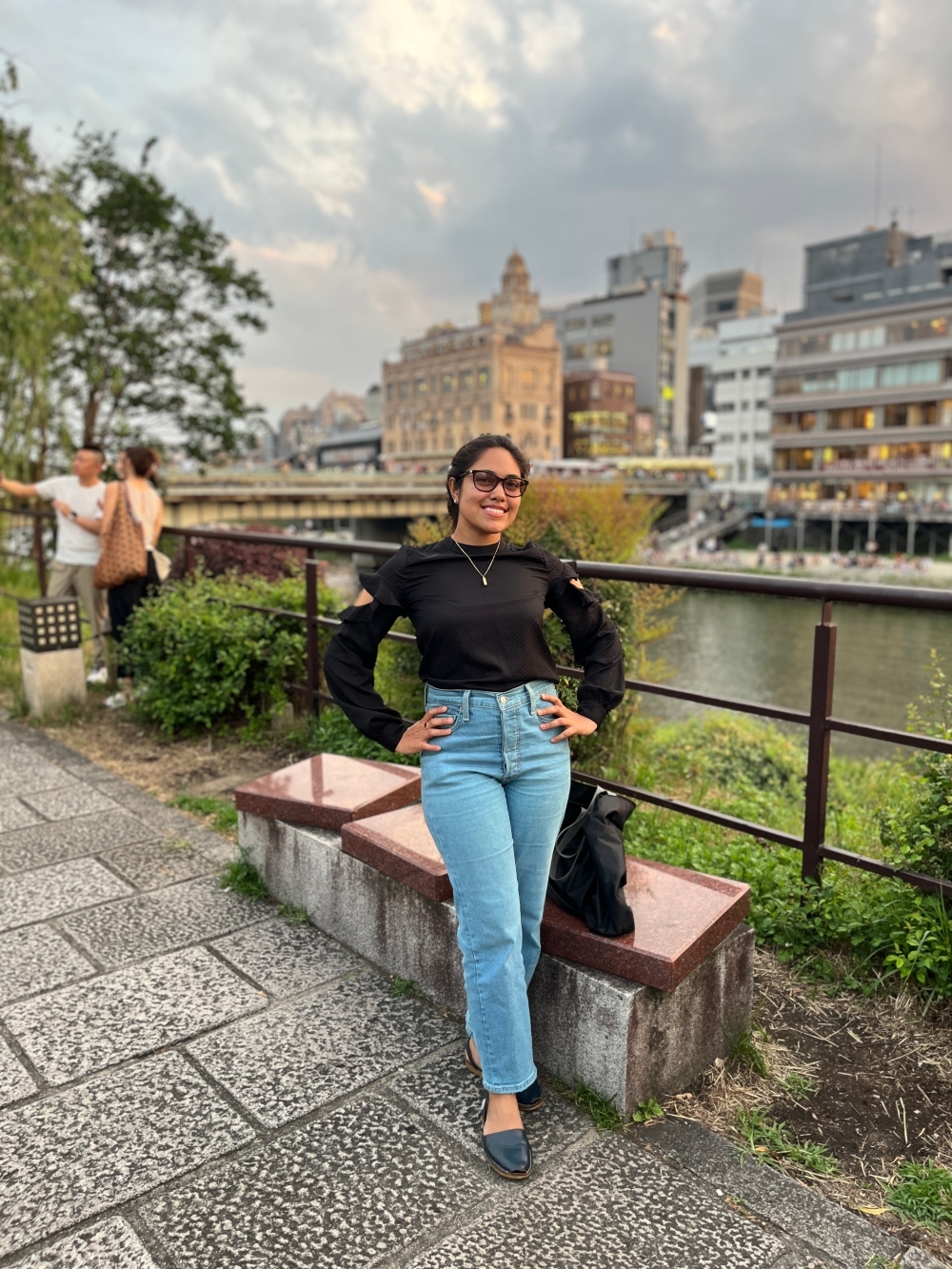
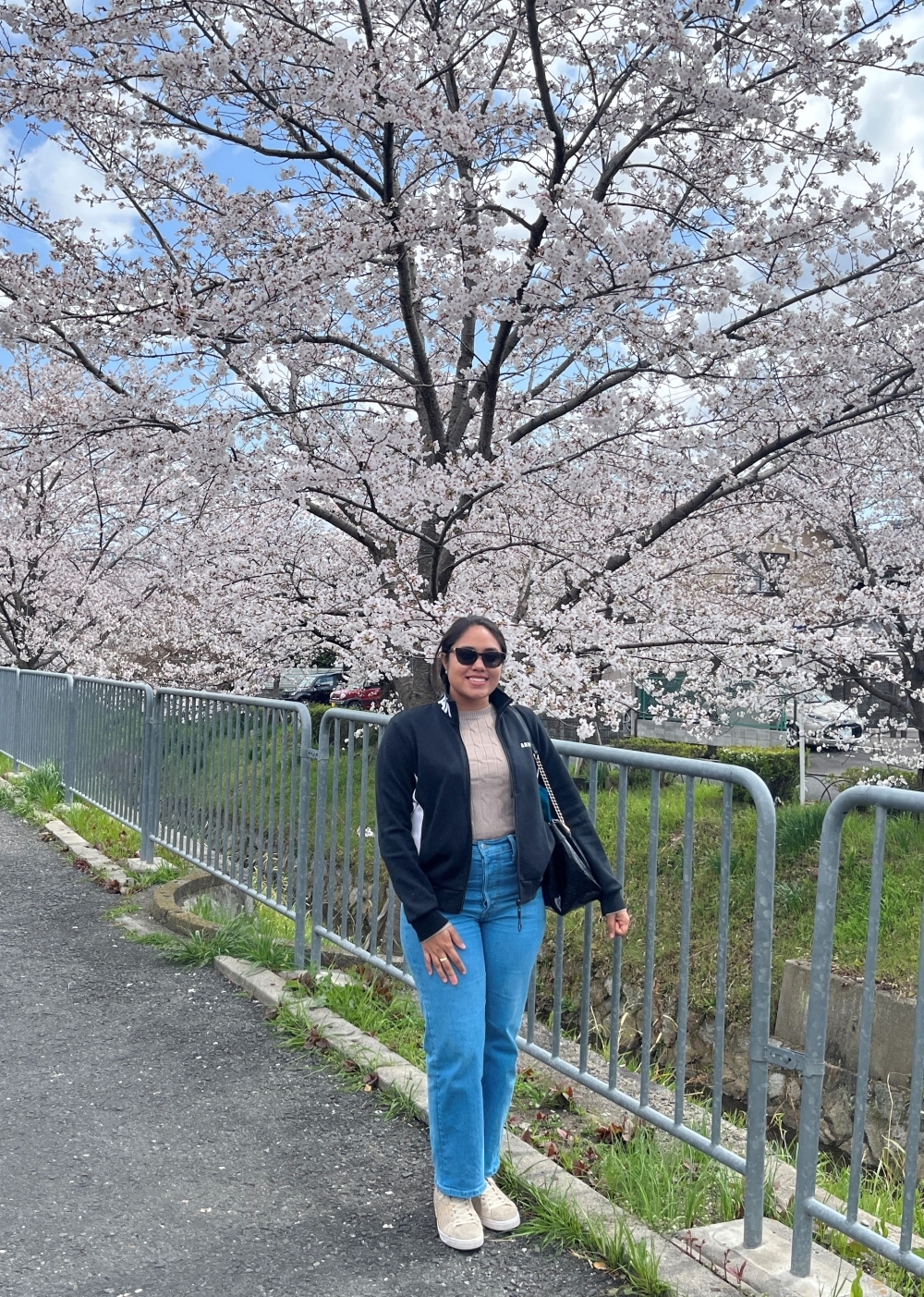
I am Bridget J. Francis, and my journey from Felicity, Chaguanas, in Trinidad and Tobago, to Japan didn’t start with a map, but with a feeling—a "burning fire" inside me that whispered I was destined for more.
Growing up, my greatest role model has always been my mother. I watched her work, study, and tirelessly follow her passions, always standing fiercely for justice and what is right. Her example taught me that a life of purpose was not only possible but necessary.
After completing my bachelor's degree in Chemical and Process Engineering at The University of the West Indies, I spent a year navigating internships and immersing myself in humanitarian and philanthropic work with my mother’s NPO, The Wendy Francis Foundation. Yet, even in the midst of this meaningful work, I felt a persistent pull toward something even greater. During reflective moments, my mind always reverted back to the lab. I remembered the fulfillment I felt while immersed in research—exploring the unknown and creating solutions that could drive real impact in the world. I knew I had to follow that passion.
The opportunity arrived in a way that felt like fate: an Instagram post about the MEXT Scholarship, sent to me by my mom. As I researched the program and learned more about Japan, I knew instantly. This was it. This was the perfect fit for me.
I’ll never forget the moment I found out I was accepted. I was at work, in the middle of a meeting, when my phone pinged. I glanced at the email subject line and a wave of pure joy washed over me. I could barely contain my excitement. As soon as I had the chance, I phoned my mom to share the awesome news. My prayers had been answered. It felt like the true beginning of my journey to make a meaningful mark on the world.
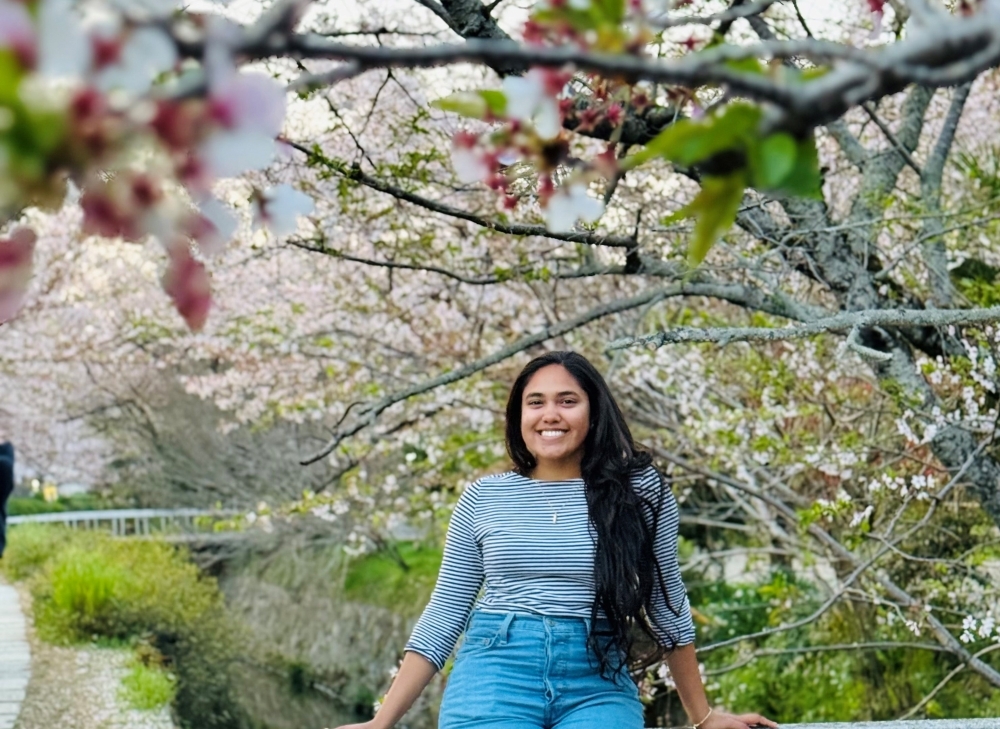
My life in Japan has been a profound experience of growth and discovery. What I have come to cherish most is the deep peacefulness and serenity I find in my daily surroundings. While everyone often keeps to themselves, there is a quiet respect in that space that allows for reflection. It is in the simple moments that I feel the most connected. When I’m riding my bicycle along the Kamogawa River, I’ll look at the landscape and have a moment of realization: "Wow, I am actually in Japan, on the opposite side of the globe. I am studying, living my greatest life, and following my dreams."
This journey has also brought me face-to-face with a problem that threatens the very heart of my home. To understand the threat, one must first understand our beaches. A beach is more than just sand meeting water; it is a dynamic, living interface between land and sea. In nature, it is our nation's first line of defense, a natural barrier that absorbs the energy of waves and protects our coastal communities from erosion and storm surges. For our people, it is a major core of our culture and our economy—the center of community life and a primary engine of our tourism sector.
Today, this vital ecosystem is being smothered. An invasive seaweed, sargassum, is choking our Caribbean coastlines, blanketing the vibrant shores in thick, decaying mats. This isn't just an eyesore; it's an economic catastrophe in the making. The foul odor and inaccessible waters cripple the tourism industry, which is a cornerstone of our nation's GDP. This directly threatens the livelihoods of countless families, drains our country's foreign exchange, and undermines our economic stability.
But what if the key to solving this crisis wasn't just what we make from it, but how we unlock its potential? My work centers on pioneering a more refined and efficient extraction process. I am essentially creating a sophisticated blueprint to selectively isolate the most valuable compounds hidden within the seaweed. From there, strategically matching these unique components to their highest-value applications creates a pipeline of possibilities for industries from pharmaceuticals to advanced textiles. This isn't just about a single product; it's about building an entire framework to turn a regional disaster into a sustainable resource.
Living alone in a new country has come with huge responsibilities, but it has also given me the freedom to truly take charge of my life. I’ve become more disciplined, recognizing that small, consistent habits in prayer, exercise, and studying lead to the greatest outcomes.
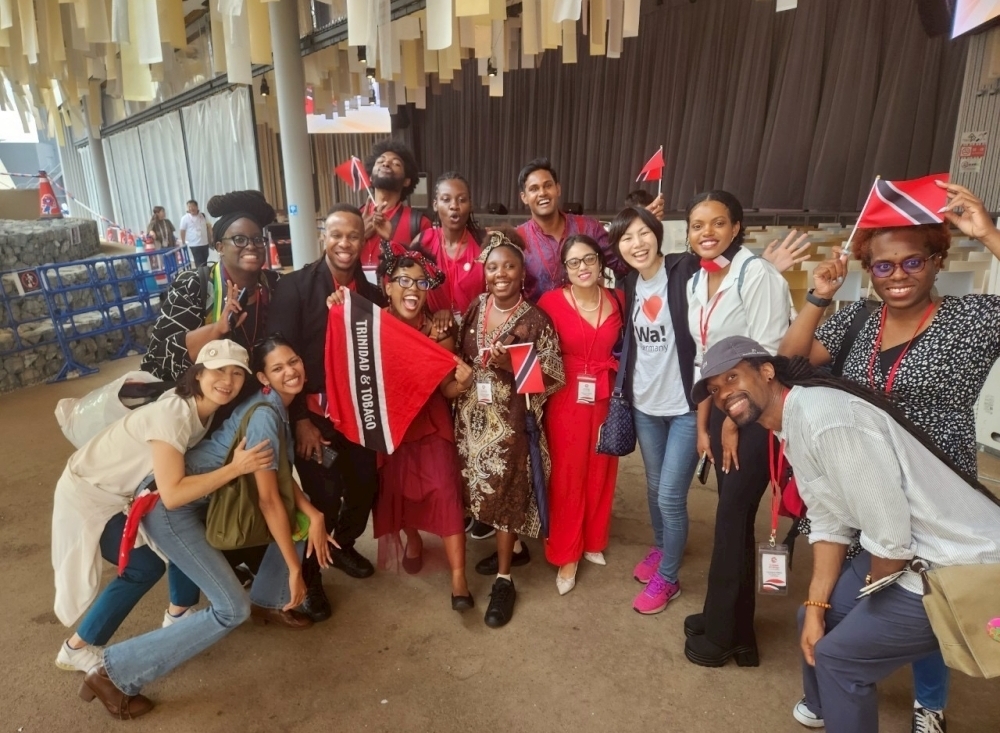
Though I have embraced the tranquility of Japan, at the end of the day, I am "Trini to the bone." Ultimately, my work is a bridge between Japan and the Caribbean. My mission is multi-layered: at the community level, I aim to empower our most vulnerable coastal and rural groups by transforming this environmental burden into a source of sustainable income. At the national level, my goal is to help secure Trinidad and Tobago's economic future by creating a new, resilient bio-economy. And at the regional level, I envision my research providing a blueprint that can be adopted across CARICOM, fostering a lasting connection between our island nations built on shared innovation and climate resilience.
For any student back home who feels nervous about taking a similar leap, my message is this: Truly you are unique, so embrace that and lean into it, for you are special and what you have to offer is valuable. Believe in yourself, and never underestimate the power of combining hard work with prayer and devotion.
This journey would not be possible without the unwavering support I’ve received, and for that, I would like to thank God, my mother, and my grandmother for always being with me in everything that I do.
Growing up, my greatest role model has always been my mother. I watched her work, study, and tirelessly follow her passions, always standing fiercely for justice and what is right. Her example taught me that a life of purpose was not only possible but necessary.
After completing my bachelor's degree in Chemical and Process Engineering at The University of the West Indies, I spent a year navigating internships and immersing myself in humanitarian and philanthropic work with my mother’s NPO, The Wendy Francis Foundation. Yet, even in the midst of this meaningful work, I felt a persistent pull toward something even greater. During reflective moments, my mind always reverted back to the lab. I remembered the fulfillment I felt while immersed in research—exploring the unknown and creating solutions that could drive real impact in the world. I knew I had to follow that passion.
The opportunity arrived in a way that felt like fate: an Instagram post about the MEXT Scholarship, sent to me by my mom. As I researched the program and learned more about Japan, I knew instantly. This was it. This was the perfect fit for me.
I’ll never forget the moment I found out I was accepted. I was at work, in the middle of a meeting, when my phone pinged. I glanced at the email subject line and a wave of pure joy washed over me. I could barely contain my excitement. As soon as I had the chance, I phoned my mom to share the awesome news. My prayers had been answered. It felt like the true beginning of my journey to make a meaningful mark on the world.
My life in Japan has been a profound experience of growth and discovery. What I have come to cherish most is the deep peacefulness and serenity I find in my daily surroundings. While everyone often keeps to themselves, there is a quiet respect in that space that allows for reflection. It is in the simple moments that I feel the most connected. When I’m riding my bicycle along the Kamogawa River, I’ll look at the landscape and have a moment of realization: "Wow, I am actually in Japan, on the opposite side of the globe. I am studying, living my greatest life, and following my dreams."
This journey has also brought me face-to-face with a problem that threatens the very heart of my home. To understand the threat, one must first understand our beaches. A beach is more than just sand meeting water; it is a dynamic, living interface between land and sea. In nature, it is our nation's first line of defense, a natural barrier that absorbs the energy of waves and protects our coastal communities from erosion and storm surges. For our people, it is a major core of our culture and our economy—the center of community life and a primary engine of our tourism sector.
Today, this vital ecosystem is being smothered. An invasive seaweed, sargassum, is choking our Caribbean coastlines, blanketing the vibrant shores in thick, decaying mats. This isn't just an eyesore; it's an economic catastrophe in the making. The foul odor and inaccessible waters cripple the tourism industry, which is a cornerstone of our nation's GDP. This directly threatens the livelihoods of countless families, drains our country's foreign exchange, and undermines our economic stability.
But what if the key to solving this crisis wasn't just what we make from it, but how we unlock its potential? My work centers on pioneering a more refined and efficient extraction process. I am essentially creating a sophisticated blueprint to selectively isolate the most valuable compounds hidden within the seaweed. From there, strategically matching these unique components to their highest-value applications creates a pipeline of possibilities for industries from pharmaceuticals to advanced textiles. This isn't just about a single product; it's about building an entire framework to turn a regional disaster into a sustainable resource.
Living alone in a new country has come with huge responsibilities, but it has also given me the freedom to truly take charge of my life. I’ve become more disciplined, recognizing that small, consistent habits in prayer, exercise, and studying lead to the greatest outcomes.
Though I have embraced the tranquility of Japan, at the end of the day, I am "Trini to the bone." Ultimately, my work is a bridge between Japan and the Caribbean. My mission is multi-layered: at the community level, I aim to empower our most vulnerable coastal and rural groups by transforming this environmental burden into a source of sustainable income. At the national level, my goal is to help secure Trinidad and Tobago's economic future by creating a new, resilient bio-economy. And at the regional level, I envision my research providing a blueprint that can be adopted across CARICOM, fostering a lasting connection between our island nations built on shared innovation and climate resilience.
For any student back home who feels nervous about taking a similar leap, my message is this: Truly you are unique, so embrace that and lean into it, for you are special and what you have to offer is valuable. Believe in yourself, and never underestimate the power of combining hard work with prayer and devotion.
This journey would not be possible without the unwavering support I’ve received, and for that, I would like to thank God, my mother, and my grandmother for always being with me in everything that I do.