JET Programme Series: Ichigo Ichie! (一期一会) - Mario Jones
2026/9/25
The title of this article has become the mantra of my life in Japan thus far. Everyday when I wake up, regardless of how I'm feeling, I remind myself that I've just arisen in the land of the rising sun. "Ichigo Ichie" is a Japanese philosophy, when translated to English means, "one encounter, one lifetime". In my time here, I have decided to let that philosophy guide my life as one day this chapter will be over. "Well bai, meen go lie. De time flying!"
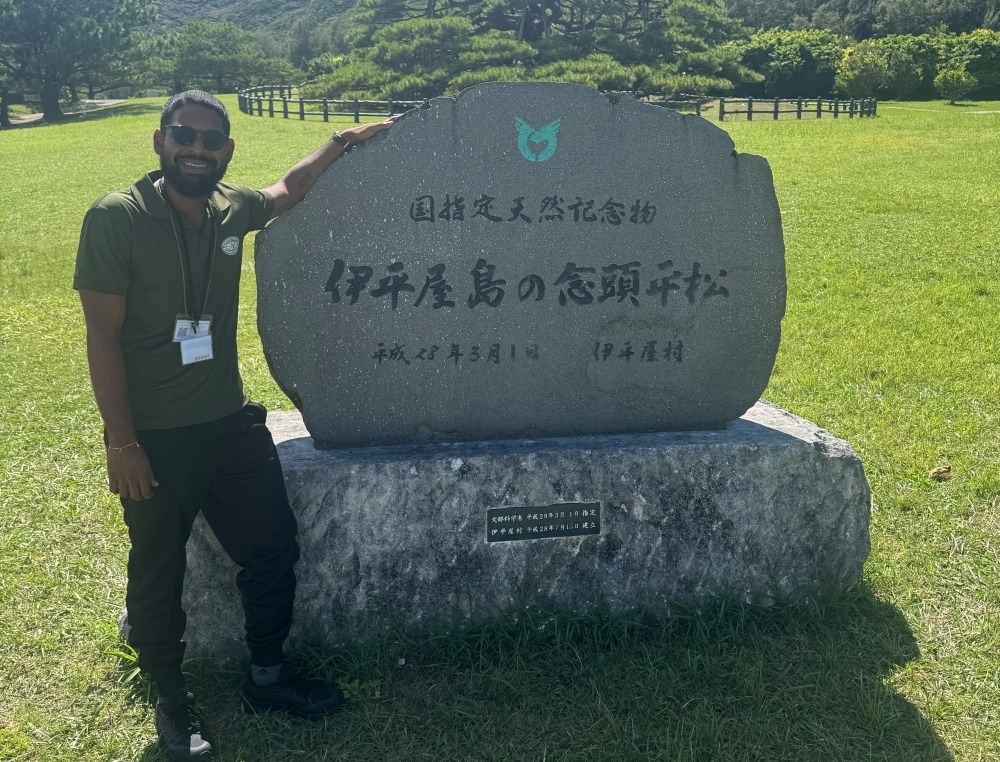
After twenty-four hours and more of travelling via airplane, bus, ferry and car, I finally arrived in my placement area, Iheya Island in Okinawa, Japan. The island is in the North of Okinawa and disconnected from the main island of Okinawa. The island is small and has a population of roughly one thousand people. However, life here is relaxed, surrounded by a pristine coastline on either side of the entire island. Being the constant foreigner living here, of course I became the main attraction. In saying this, in no way have I ever felt like an outsider here. The genuine kindness of the people here has made me feel like an adopted son.
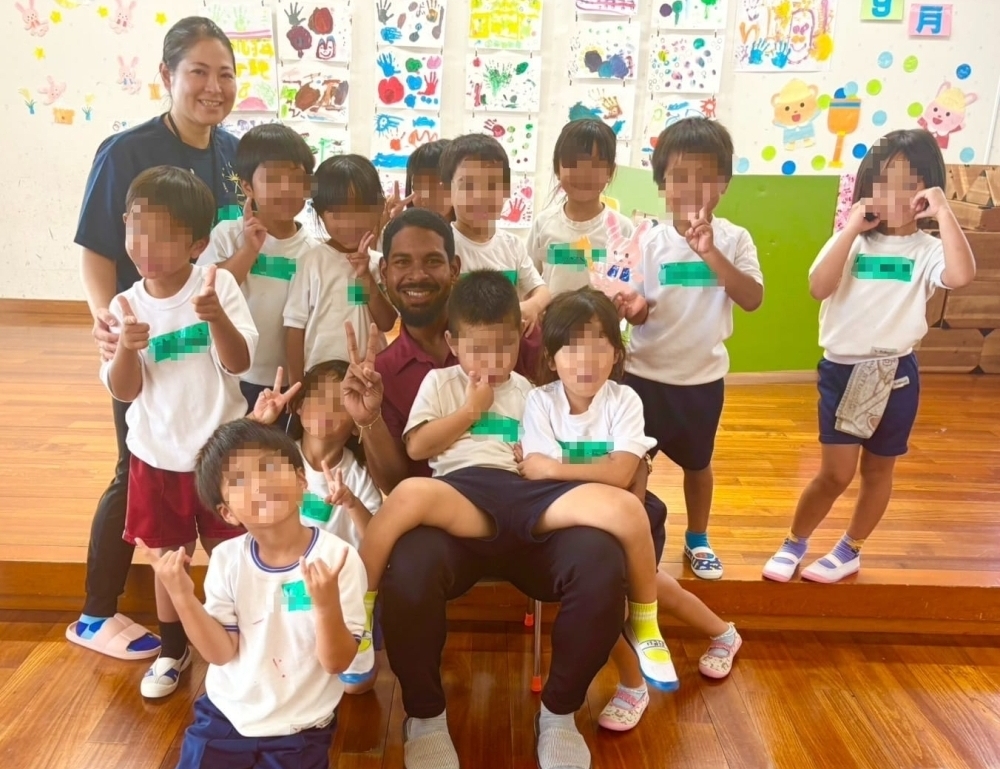
My schedule has been busy since moving here, my days are filled with screaming children with high energy during and after school hours. I'm the only ALT on this island and the only native English speaker. Therefore, my role here is to provide English support at all levels. When I say all levels, I mean all with the exception of Senior High School which doesn't exist in Iheya. I work with the most adorable kids in Nursery School and Kindergarten as well as the "wanna be" cool kids in Elementary School and Junior High School. My days with them are filled with learning and laughter. They have so many questions about Trinidad and Tobago. They go ballistic when I show them Trinidad's cuisine and Carnival (Kiddies Carnival).
Strangely enough, it's not only the kids but also the adults. I've also been appointed to lead the Adult Eikaiwa (English conversation) class here and they are intrigued with the multicultural society that I patriotically represent. In writing this, I'm also preparing to assist in an ESL camp in the mountains of the main island of Okinawa for one week. An opportunity that I couldn't say no to when it presented itself. Of course, teaching English is what I'm here to do but my role exceeds that. I help out in every capacity I can. This ranges from helping out with school events such as Sports days and Cultural festivals. Also, I join in the community and beach cleanups (voluntarily) as well as assist in community festivals. Being an avid football fan, "fete match" player and former academy coach, I assist the Elementary school's football team with their training sessions.
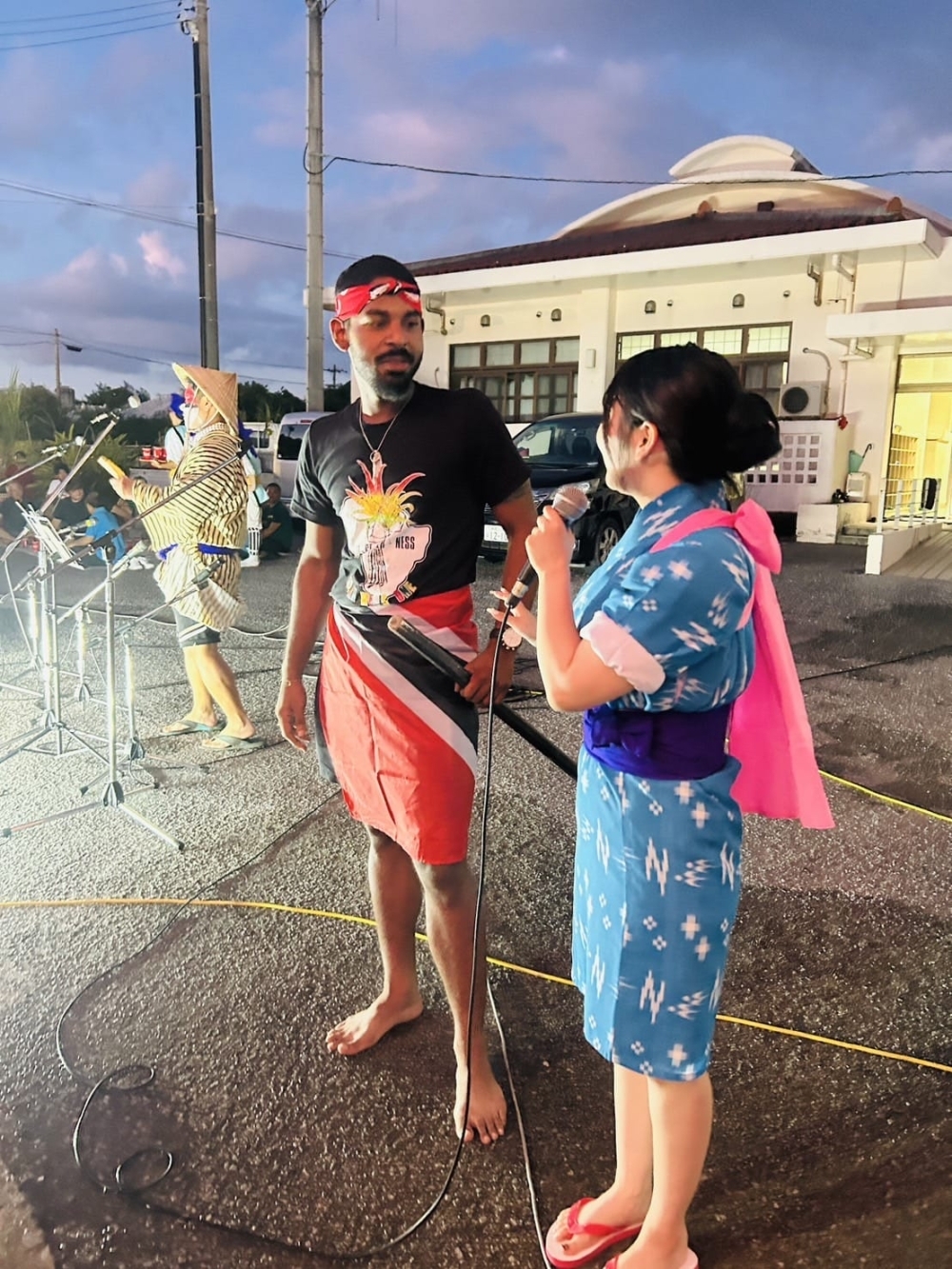
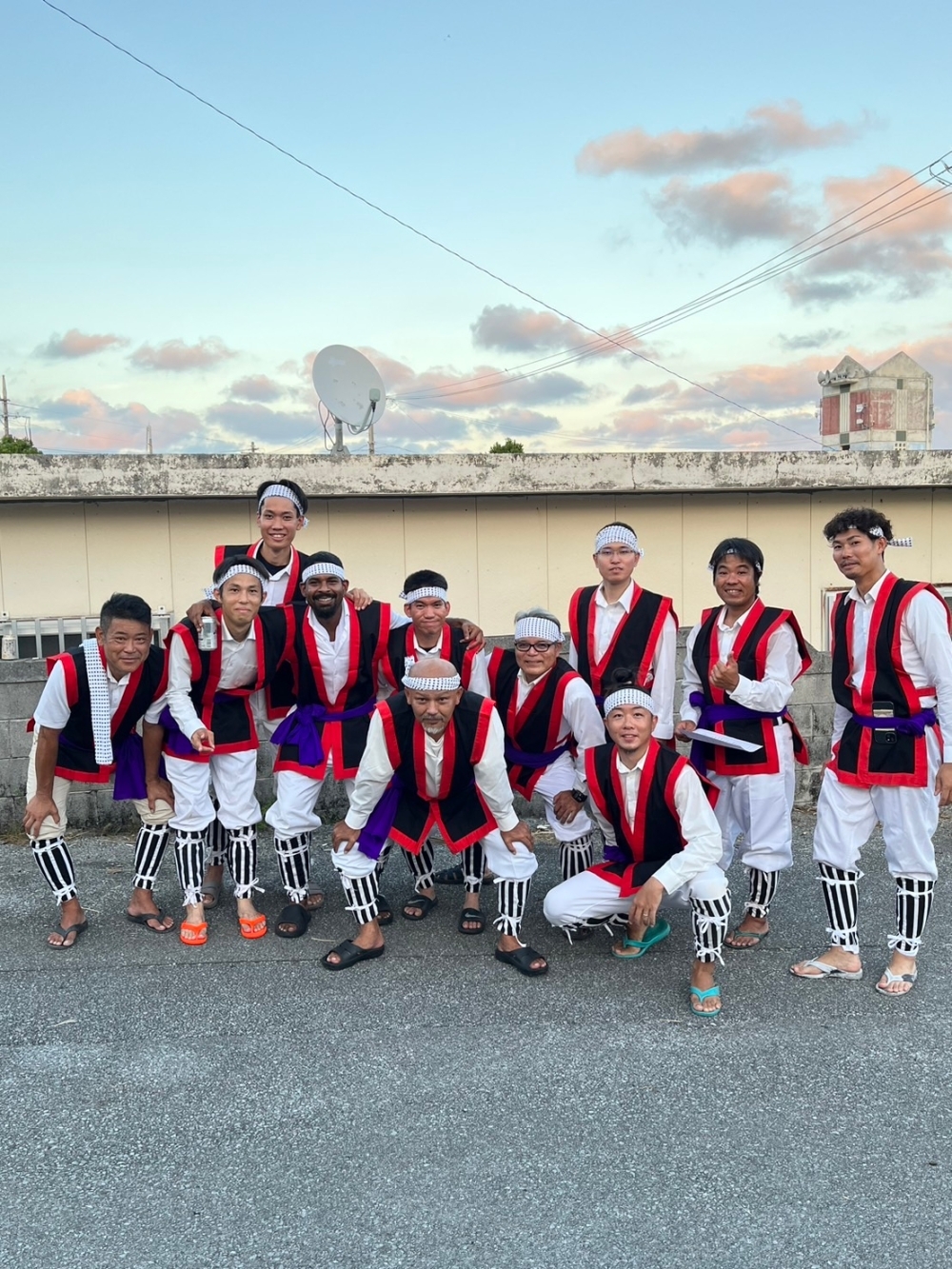
The beauty of living on such a small island is that you don't only watch the festivals but you also participate. In the past year I have participated in the Eisa festival as a special cultural act where I showed them how to "palance". The pandemonium that was caused in those five minutes will live with me forever. Then, my most memorable experience here was participating in my community's Honensai festival. After a month long of practicing Bojutsu and traditional Okinawan dances, the day of the festival came. I was very nervous but the day was spent drinking Awamori and dancing the night away. The way of the Ryukyu!
This was just the beginning, following these festivals came the Iheya island inter-community sports day. My community is the smallest on the island, hence I was nominated for almost every event. Safe to say, I didn't disappoint placing in the top three in all the events I participated in. I came first in a "slipper challenge race" which has now earned me the nickname of "Surippa (slipper) man."
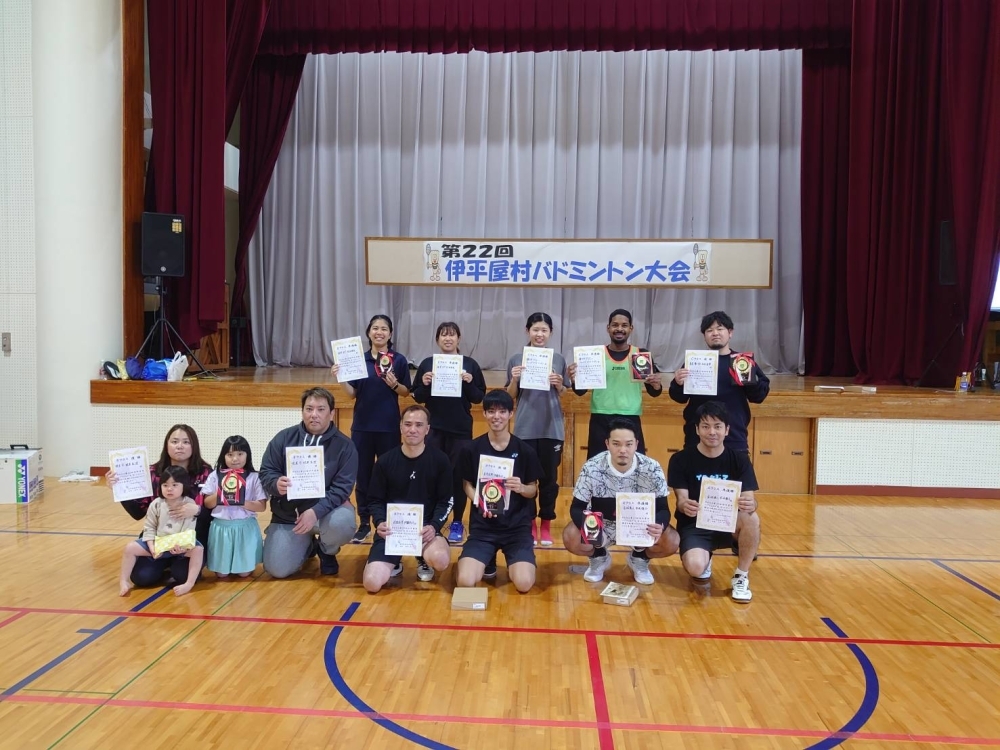
Placing second in the island's badminton tournament is also up there as a top memory for me, as well as participating in the "tug-o-war" for the Otsunahike festivals.
Do I even have free time? Yes, I do! I spend a lot of time on the beach developing my swimming and fishing skills. In the winter time almost everyone is on the beach for Izari season (octopus catching). Last year, I just looked but this winter I'm definitely planning on catching one myself. Also, I enjoy taking drives alone just viewing and appreciating the breathtaking nature that I am blessed to lose myself in. Sometimes, I go out with my colleagues or community friends to eat at the local izakaya restaurants or for drinks at the karaoke bars, which often turns into a panel-like discussion about Trinidad and Tobago with questions coming at me from all directions.
When I'm not on the island, I often venture out on the main island in Okinawa mainly to Naha City or Chatan area to enjoy the nightlife scene. These two places in particular are major tourist hubs and I've already made quite a few friends there as well. I haven't really travelled outside of Okinawa since moving here except for winter break when I visited Tokyo for the New Year. Luckily, I was able to meet up with other Trini JETs from my cohort. It can be daunting being very far away from Trinidad during winter, so words can't describe how that one week felt to be among other Trinis sharing our experiences of our life in Japan so far.
Honestly, it's been a ride so far as obstacles do present itself. The language barrier I would say is the most difficult one. However, I have been doing my best to learn as much Japanese as I can. Living here you realize that you have to learn Keigo (formal Japanese) as well as Tameguchi (casual Japanese) if you truly want to connect with the people. Living in Okinawa, especially Iheya Island, "Uchinaaguchi" or "Hogen" is also spoken which is the Indigenous Okinawan dialect. Thus, I am navigating through learning three languages and three writing systems. And, of course I miss my hearty "Trini" food but I always do my best to cook as much "Trini" food as I can. Finally, to anyone interested in becoming a JET, I think the most important thing to do is to be open minded. Also, having knowledge on the language, culture and laws that govern Japanese society goes a long way. After you're placed, do some research about your placement prefecture and town. Most importantly, find ways to nurture your mental health during your experience in Japan.
JET Programme Series: Ichigo Ichie! (一期一会) - Mario Jones
After twenty-four hours and more of travelling via airplane, bus, ferry and car, I finally arrived in my placement area, Iheya Island in Okinawa, Japan. The island is in the North of Okinawa and disconnected from the main island of Okinawa. The island is small and has a population of roughly one thousand people. However, life here is relaxed, surrounded by a pristine coastline on either side of the entire island. Being the constant foreigner living here, of course I became the main attraction. In saying this, in no way have I ever felt like an outsider here. The genuine kindness of the people here has made me feel like an adopted son.
My schedule has been busy since moving here, my days are filled with screaming children with high energy during and after school hours. I'm the only ALT on this island and the only native English speaker. Therefore, my role here is to provide English support at all levels. When I say all levels, I mean all with the exception of Senior High School which doesn't exist in Iheya. I work with the most adorable kids in Nursery School and Kindergarten as well as the "wanna be" cool kids in Elementary School and Junior High School. My days with them are filled with learning and laughter. They have so many questions about Trinidad and Tobago. They go ballistic when I show them Trinidad's cuisine and Carnival (Kiddies Carnival).
Strangely enough, it's not only the kids but also the adults. I've also been appointed to lead the Adult Eikaiwa (English conversation) class here and they are intrigued with the multicultural society that I patriotically represent. In writing this, I'm also preparing to assist in an ESL camp in the mountains of the main island of Okinawa for one week. An opportunity that I couldn't say no to when it presented itself. Of course, teaching English is what I'm here to do but my role exceeds that. I help out in every capacity I can. This ranges from helping out with school events such as Sports days and Cultural festivals. Also, I join in the community and beach cleanups (voluntarily) as well as assist in community festivals. Being an avid football fan, "fete match" player and former academy coach, I assist the Elementary school's football team with their training sessions.
The beauty of living on such a small island is that you don't only watch the festivals but you also participate. In the past year I have participated in the Eisa festival as a special cultural act where I showed them how to "palance". The pandemonium that was caused in those five minutes will live with me forever. Then, my most memorable experience here was participating in my community's Honensai festival. After a month long of practicing Bojutsu and traditional Okinawan dances, the day of the festival came. I was very nervous but the day was spent drinking Awamori and dancing the night away. The way of the Ryukyu!
This was just the beginning, following these festivals came the Iheya island inter-community sports day. My community is the smallest on the island, hence I was nominated for almost every event. Safe to say, I didn't disappoint placing in the top three in all the events I participated in. I came first in a "slipper challenge race" which has now earned me the nickname of "Surippa (slipper) man."
Placing second in the island's badminton tournament is also up there as a top memory for me, as well as participating in the "tug-o-war" for the Otsunahike festivals.
Do I even have free time? Yes, I do! I spend a lot of time on the beach developing my swimming and fishing skills. In the winter time almost everyone is on the beach for Izari season (octopus catching). Last year, I just looked but this winter I'm definitely planning on catching one myself. Also, I enjoy taking drives alone just viewing and appreciating the breathtaking nature that I am blessed to lose myself in. Sometimes, I go out with my colleagues or community friends to eat at the local izakaya restaurants or for drinks at the karaoke bars, which often turns into a panel-like discussion about Trinidad and Tobago with questions coming at me from all directions.
When I'm not on the island, I often venture out on the main island in Okinawa mainly to Naha City or Chatan area to enjoy the nightlife scene. These two places in particular are major tourist hubs and I've already made quite a few friends there as well. I haven't really travelled outside of Okinawa since moving here except for winter break when I visited Tokyo for the New Year. Luckily, I was able to meet up with other Trini JETs from my cohort. It can be daunting being very far away from Trinidad during winter, so words can't describe how that one week felt to be among other Trinis sharing our experiences of our life in Japan so far.
Honestly, it's been a ride so far as obstacles do present itself. The language barrier I would say is the most difficult one. However, I have been doing my best to learn as much Japanese as I can. Living here you realize that you have to learn Keigo (formal Japanese) as well as Tameguchi (casual Japanese) if you truly want to connect with the people. Living in Okinawa, especially Iheya Island, "Uchinaaguchi" or "Hogen" is also spoken which is the Indigenous Okinawan dialect. Thus, I am navigating through learning three languages and three writing systems. And, of course I miss my hearty "Trini" food but I always do my best to cook as much "Trini" food as I can. Finally, to anyone interested in becoming a JET, I think the most important thing to do is to be open minded. Also, having knowledge on the language, culture and laws that govern Japanese society goes a long way. After you're placed, do some research about your placement prefecture and town. Most importantly, find ways to nurture your mental health during your experience in Japan.
JET Programme Series: Ichigo Ichie! (一期一会) - Mario Jones